
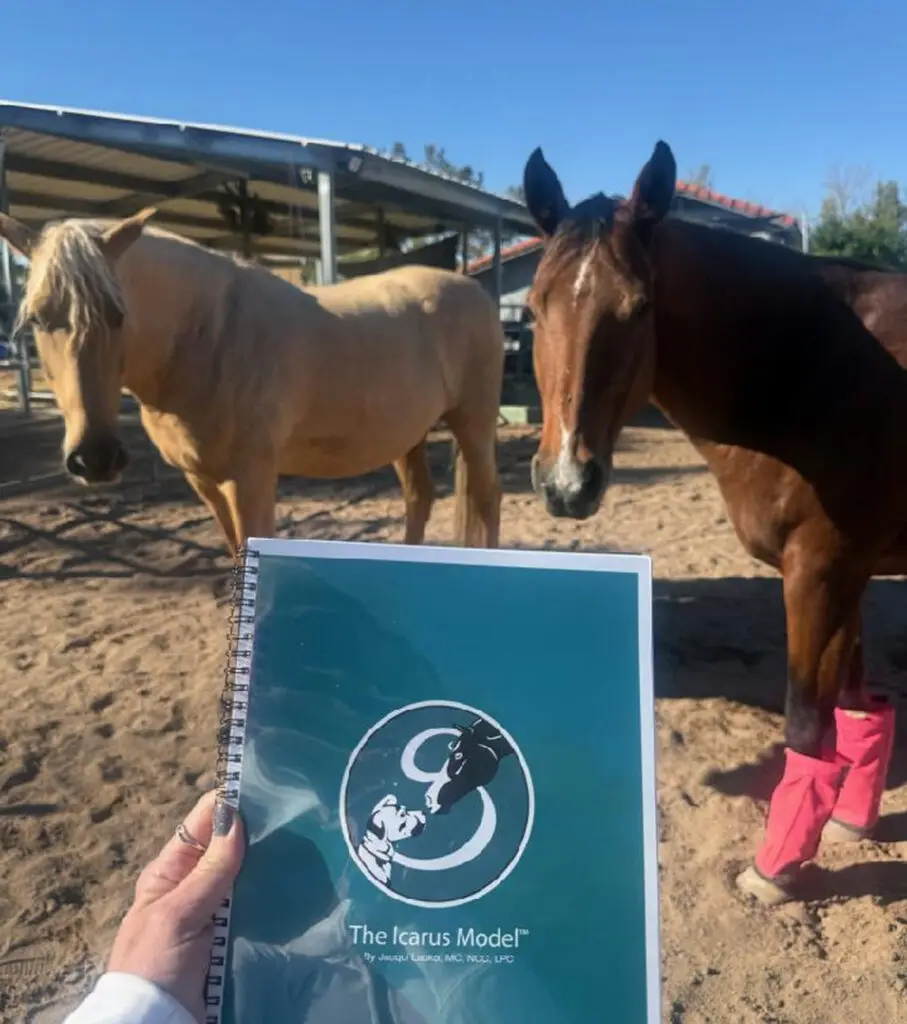
We’ve been doing a lot of coaching with equine-assisted practices lately, and these are some of the most effective strategies we’re seeing:
- Show the process.
Film mock client sessions so potential clients know what to expect. This builds excitement and sets realistic expectations (no, we’re not just riding horses around). - Create a personal intro video.
Stand with your horse, share your experience, and let people feel your presence. Clients often choose based on connection and energy. - Build referral relationships.
Network with office-based therapists and providers in your area. Collaboration drives consistent referrals. - Specialize strategically.
Focus on underserved niches like postpartum, Autism, ARFID, etc. “Trauma” alone is often too broad in today’s market. - Highlight your training.
List your certifications, mentorships, and advanced trainings—this builds credibility and trust. - Stand out with your messaging.
Your website or Psychology Today profile should have a gripping, unique statement—not something that blends in. - Use authentic photos.
Skip the stiff headshots. Show yourself doing something you love—especially with your horse. Clients want to see you, not just the animal. - Host on-site meet & greets.
Offer free monthly events at your farm for professionals and potential clients. Consider doing a mock session to showcase the work. - Show up online consistently.
Share free tips, insights, and education. This builds trust and positions you as an expert. - Create a resource hub.
A strong resources page helps your community while also demonstrating your expertise. - Develop original content.
Write a book, manual, or group curriculum. This elevates your authority and expands your reach.
✨ This field is powerful, and how you present it matters. Make it visible, relatable, and accessible.
We offer consulting for practices looking to grow and refine their approach—reach out if you’re ready to take things to the next level.